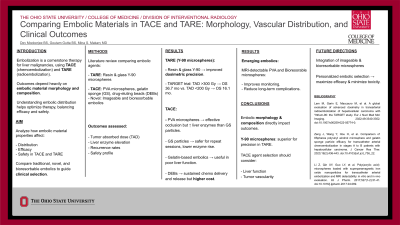
(51) Comparing Embolic Materials in TACE and TARE: Morphology, Vascular Distribution, and Clinical Outcomes
Saturday, October 18, 2025
6:00 PM - 7:30 PM East Coast USA Time
Goutam Gutta, BS – Medical Student, The Ohio State University College of Medicine; Mina Makary, MD – Vascular and Interventional Radiologist, The Ohio State University Wexner Medical Center
Purpose: To analyze how embolic material properties influence distribution, efficacy, and safety in TACE and TARE for liver malignancies.
Material and Methods: This review explores embolic material properties, tumor vascularity, and clinical outcomes from transarterial chemoembolization (TACE) and transarterial radioembolization (TARE) studies. The analysis compares resin and glass Y-90 microspheres in TARE, as well as polyvinyl alcohol (PVA), gelatin sponge (GS), drug-eluting beads (DEBs), and novel imageable or bioresorbable embolics used in TACE.
Results: Resin and glass Y-90 microspheres in TARE improve dosimetric precision and tumor absorbed dose (TAD) escalation. The TARGET study found that TADs >300 Gy were associated with improved overall survival (OS) of 36.7 months compared to < 200 Gy (16.1 months). Comparative TACE studies highlight embolic agent morphology's effect on performance. 8Spheres PVA microspheres achieved effective vascular occlusion but were linked to greater post-procedural liver enzyme elevation than GS particles, which allow safer repeat TACE sessions. Gelatin-based embolics favor patients with compromised liver function, while DEBs provide prolonged chemotherapy release at higher costs. MRI-detectable PVA and bioresorbable microspheres offer new avenues to enhance precision and reduce complications.
Conclusions: The morphology and composition of embolic materials play a critical role in determining procedural outcomes in TACE and TARE. While Y-90 microspheres excel in delivering precise radiation doses, the choice between PVA, GS, and DEBs in TACE should be tailored to patient-specific factors such as liver function and tumor vascularity. Imageable and bioresorbable microspheres promise enhanced safety and precision. By aligning embolic material selection with clinical and procedural needs, interventional radiologists can further optimize outcomes in embolization therapies.