(79) Selective Lymphatic Duct Embolization in Patients with Chylothorax and Thoracic Duct Side-Branch Injury
Saturday, October 18, 2025
6:00 PM - 7:30 PM East Coast USA Time
Joe Khoury, MD – Interventional Radiologist, Emory University School of Medicine; Hakob Kocharyan, MD – Interventional Radiologist, University of South Florida Morsani College of Medicine, Moffitt Cancer Center; Christopher Yeisley, MD – Interventional Radiologist, Naval Medical Center Portsmouth; Elias Salloum, MD – Interventional Radiologist, University of South Florida Morsani College of Medicine, Moffitt Cancer Center; Mustafa Al-Roubaie, MD – Interventional Radiologist, University of South Florida Morsani College of Medicine, Moffitt Cancer Center
Purpose: Chylothorax, the accumulation of chyle in the pleural space, is a potentially fatal condition that necessitates intervention. It commonly results from both traumatic and non-traumatic etiologies, including malignancy. This case describes the utility of selective lymphatic duct embolization (SLDE) in managing high-output chylothorax.
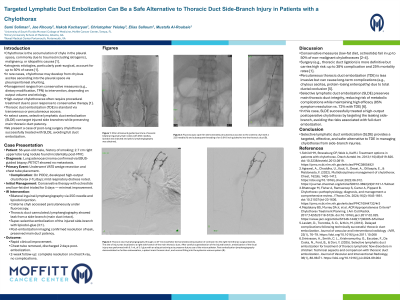
Material and Methods: This case describes a 56-year-old male status post-lung wedge resection who developed a high-output chylothorax. Initial management with octreotide and a low-fat diet was unsuccessful. A percutaneous lymphangiogram identified extravasation of contrast from a thoracic duct side-branch. Instead of traditional thoracic duct embolization (TDE), SLDE was performed to preserve the main thoracic duct.
Results: After superselective side-branch embolization of the patient’s thoracic duct, he had rapid symptom resolution and successful chest tube removal. The patient was discharged within two days, without recurrence of symptoms.
Conclusions: TDE is a common percutaneous approach but can lead to thoracic duct occlusion and lymphatic backflow and leaks. When a single branch of the thoracic duct is injured, SLDE offers a novel alternative to target that side-branch while maintaining thoracic duct integrity. Comparative studies suggest SLDE provides similar efficacy to TDE while reducing severe complications. More research is needed to establish the long-term risks versus benefits of SLDE. SLDE is a promising, minimally invasive intervention for high-output chylothorax. It offers a safer alternative to TDE when a side-branch injury exists. This case highlights its potential for improving patient outcomes with fewer complications.