(68) Super-selective Intra-arterial Cerebral Infusion Therapy in the Treatment of Brain Cancer: A Review
Saturday, October 18, 2025
6:00 PM - 7:30 PM East Coast USA Time
Mina Makary, MD, DABR, FSVM, FAHA, FCCP – Vascular and Interventional Radiologist, Clinical Associate Professor, Radiology, Ohio State Wexner Medical Center; Sabrina Almashni, B.S. – Medical Student, The Ohio State University College of Medicine
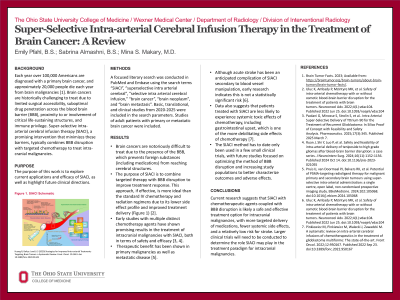
Purpose: Super-selective intra-arterial cerebral infusion therapy (SIACI) is a promising, novel intervention for the treatment of intracranial malignancies that combines blood-brain barrier (BBB) disruption with targeted chemotherapy. The purpose of this work is to explore current applications and efficacy of SIACI, as well as highlight future clinical directions.
Material and Methods: A focused search was conducted in PubMed and Embase using the search terms “SIACI”, “superselective intra arterial cerebral”, “selective intra arterial cerebral infusion,” “brain cancer”, “brain neoplasm”, and “brain metastasis”. Basic, translational, and clinical studies of adult patients with primary or metastatic brain cancer from 2020-2025 were included in the search parameters.
Results: Brain cancers are notoriously difficult to treat due to the presence of the BBB, which prevents foreign substances from reaching cerebral structures. The purpose of SIACI is to combine targeted therapy with BBB disruption to improve treatment response. This approach, if effective, is more ideal than the standard chemotherapy and radiation regimens due to its lower side effect profile and improved treatment delivery. Early studies with multiple chemotherapy agents have shown promising results in the treatment of intracranial malignancies with SIACI, both in terms of safety and efficacy. Therapeutic benefit has been shown in primary malignancies as well as metastatic disease. Although acute stroke has been an anticipated complication of SIACI secondary to blood vessel manipulation, early research indicates this is not a statistically significant risk. Data also suggests that patients treated with SIACI are less likely to experience the systemic toxic effects of chemotherapy. The SIACI method has to date only been used in a few small clinical trials, with future studies focused on optimizing the method of BBB disruption and increasing study populations to better characterize outcomes and adverse effects.
Conclusions: Current research suggests that SIACI with chemotherapeutic agents coupled with BBB disruption is likely a safe and effective treatment option for intracranial malignancies, with more targeted delivery of medications, fewer systemic side effects, and a relatively low risk for stroke. Larger clinical trials will need to be conducted to determine the role SIACI may play in the treatment paradigm for intracranial malignancies.