(90) Therapeutic Potential of Transarterial Chemoembolization in Osteosarcoma: A New Path Forward
Saturday, October 18, 2025
6:00 PM - 7:30 PM East Coast USA Time
Nikhil Sekar, BA – Medical Student, The Ohio State University College of Medicine; Alex Rudich, BS – Medical Student, The Ohio State University College of Medicine; Elliott Fite, MS – Medical Student, The Ohio State University College of Medicine; Mina Makary, MD – Associate Clinical Professor of Radiology, Department of Radiology, The Ohio State University Medical Center
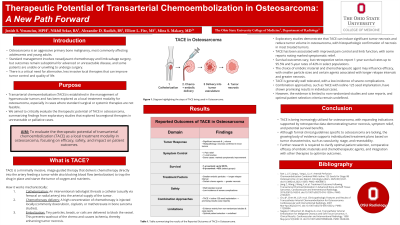
Purpose: Transarterial chemoembolization (TACE) is established in the management of hypervascular tumors and has been explored as a local treatment modality for osteosarcoma, especially in cases where standard surgical or systemic therapies are not feasible. This abstract critically evaluates the therapeutic potential of TACE in osteosarcoma, summarizing findings from exploratory studies that explored locoregional therapies in unresectable or palliative cases.
Material and Methods: A systemic literature review was conducted using PubMed, Embase, and Web of Science to identify published case reports, retrospective series, and preliminary clinical studies evaluating TACE in osteosarcoma and related sarcomas. Outcomes assessed included tumor response, pain control, survival, and adverse events.
Results: Exploratory studies demonstrate that TACE can induce significant tumor necrosis and reduce tumor volume in osteosarcoma, with histopathologic confirmation of necrosis in most treated tumors. TACE has been associated with improved pain control and limb function, with some reports noting marked symptomatic relief. Survival outcomes vary, but retrospective series report 1-year survival rates up to 95.5% and 5-year rates of 42% in select populations. The choice of embolic material and chemotherapeutic agent may influence efficacy, with smaller particle sizes and certain agents associated with longer relapse intervals and greater necrosis. TACE is generally well tolerated, with a low incidence of severe complications. Combination approaches, such as TACE with iodine-125 seed implantation, have shown promising results in individual cases1. However, the evidence is limited to non-randomized studies and case reports, and optimal patient selection criteria remain undefined.
Conclusions: TACE is being increasingly utilized for osteosarcoma, with expanding indications supported by retrospective data demonstrating tumor necrosis, symptom relief, and potential survival benefits. Although formal clinical guidelines specific to osteosarcoma are lacking, the growing body of evidence supports individualized treatment plans based on tumor characteristics, such as vascularity, stage, and resectability. Further research is required to clarify optimal patient selection, comparative efficacy of embolic materials and chemotherapeutic agents, and integration with other therapies to optimize outcomes.