(37) Beyond the Drain: Strategies to Prevent and Manage Biliary Sepsis in Cancer Patients
Saturday, October 18, 2025
6:00 PM - 7:30 PM East Coast USA Time
Bo DeVries, B.S. – Medical Student, The University of Toledo College of Medicine; Mustaqueem Pallumeera, B.S. – Medical Student, The Ohio State University College of Medicine; Mina Makary, M.D. – Associate Clinical Professor of Radiology, Department of Radiology, The Ohio State University College of Medicine
Purpose: To review current evidence on the incidence, risk factors, prevention, and management strategies for biliary sepsis following percutaneous transhepatic biliary drainage (PTBD) in patients with malignant biliary obstruction.
Material and Methods: A targeted literature review was conducted to evaluate the incidence, risk factors, and management strategies for biliary sepsis following PTBD in the setting of malignant biliary obstruction. Sources included retrospective cohort studies and clinical trials published within the last 10 years.
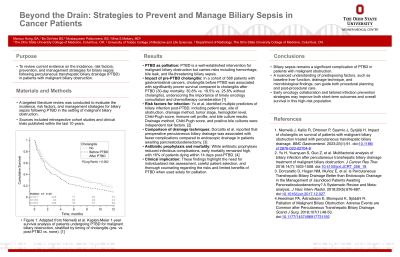
Results: PTBD is a well-established palliative intervention for obstructive jaundice due to cholangiocarcinoma or metastatic disease. Despite its utility, PTBD carries risks such as hemorrhage, bile leak, and infection—including life-threatening biliary sepsis. Following PTBD for malignant biliary obstruction, several factors influence patient outcomes and the risk of biliary sepsis. In a large retrospective cohort, cholangitis occurring before PTBD was associated with significantly poorer survival compared to cholangitis developing afterward, highlighting the potential survival benefit of timely oncology consultation and chemotherapy consideration. Other studies have identified a range of risk factors for post-PTBD biliary infection, including patient age, site of obstruction, drainage technique, tumor stage, hemoglobin level, liver function status, immune cell profile, and bile culture results. Among these, drainage method, liver function, and positive bile cultures emerged as independent predictors of infection risk. In one observational cohort, antibiotic prophylaxis offered some protection, but early mortality was still notable at 16% within two weeks. These findings underscore the importance of individualized risk assessment and thorough patient counseling.
Conclusions: Biliary sepsis remains a significant complication of PTBD in patients with malignant obstruction. An understanding of predisposing factors—such as baseline liver function, drainage technique, and microbiological findings—can guide both procedural planning and post-procedural care. Early oncology collaboration and tailored infection prevention strategies may improve both short-term outcomes and overall survival in this high-risk population.