(62) Patient Satisfaction Following Tumor Ablation: A Comparative Review Across Different Tumor Types
Saturday, October 18, 2025
6:00 PM - 7:30 PM East Coast USA Time
Satya Morar, MHM – Medical Student, Case Western Reserve University School of Medicine; Mina Makary, MD – Vascular and Interventional Radiologist, Department of Vascular and Interventional Radiology, Ohio State University Wexner Medical Center
Purpose: Tumor ablations have emerged as a popular procedure for the treatment of solid malignancies, with many patients expressing high satisfaction with their treatment. This exhibit will review patient satisfaction rates for tumor ablations in the treatment course of multiple tumor types and discuss possible avenues for improving patient satisfaction.
Material and Methods: A review of randomized control and clinical trials published between 2015 and 2025 investigating post-ablation patient satisfaction rates was performed. The studies were evaluated for patient reports and opinions regarding ablation procedures through results from satisfaction surveys conducted during the post-operative period. Current literature was also reviewed for expert opinion on future directions to improve satisfaction scores.
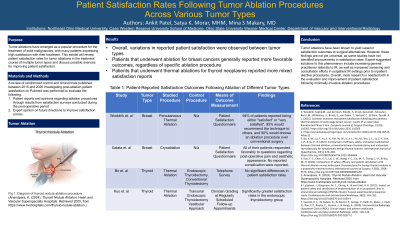
Results: A 2025 study from Wooldrik et. al investigated patient-reported satisfaction outcomes following percutaneous thermal ablations for the treatment of early-stage breast cancer. They found that 94% of patients reported being either "satisfied" or "very satisfied", 95% would recommend the technique to others, and 90% would choose an ablation procedure over conventional surgery. Galata et. al found similar results in their study of patient satisfaction in 10 breast cancer patients that underwent cryoablation; all of their patients responded favorably to their postoperative satisfaction questionnaire. Conversely, other studies have seen mixed patient satisfaction results. A study by Bo et. al evaluating patient satisfaction rates between thermal ablation, conventional thyroidectomy, and endoscopic thyroidectomy for symptomatic benign thyroid nodules did not reveal any notable differences among the investigated treatments. Furthermore, a 2024 study by Kuo et. al also compared satisfaction rates between thermal ablation and endoscopic thyroidectomy for the treatment of benign thyroid nodules; they found greater satisfaction rates in the endoscopic thyroidectomy group.
Conclusions: Tumor ablations have been shown to yield superior satisfaction outcomes to surgical alternatives. However, these findings are not yet universal, as some studies have not identified improvements in satisfaction rates. Expert-suggested solutions to this phenomenon include increasing general practitioner referrals to IR, as well as increased screening and consultation efforts in outpatient IR settings prior to inpatient elective procedures.